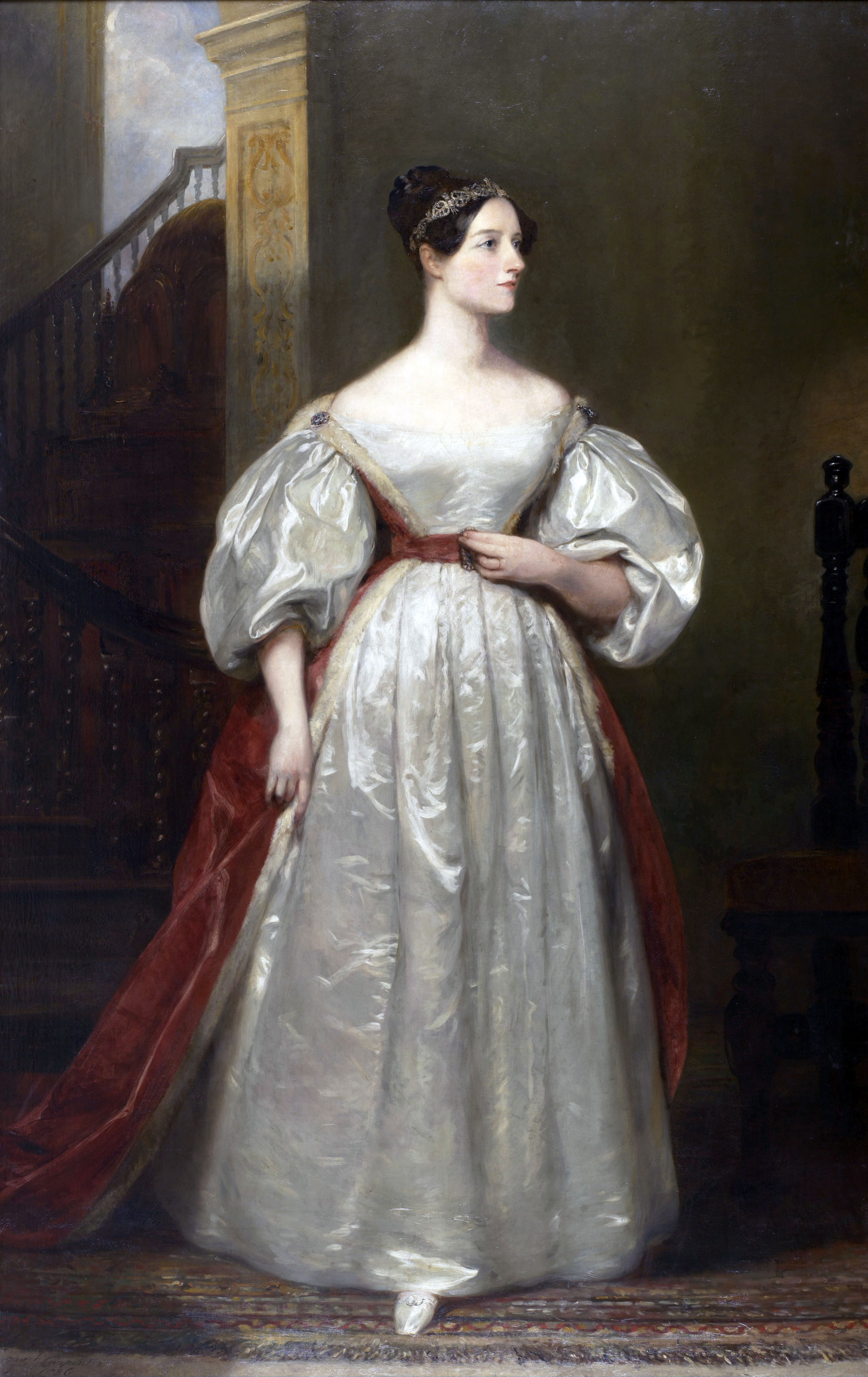

Ada Lovelace and the reach of a machine
Her 1843 notes asked readers to see the Analytical Engine as more than a way to calculate numbers. That question still gives us a useful place to begin.
In 1843, Ada Lovelace translated Luigi Menabrea's account of Charles Babbage's proposed Analytical Engine and added extensive notes of her own. Babbage designed the machine, but it was never completed in his lifetime. Lovelace's notes let us read her contribution directly, without requiring a claim that one person invented modern computing. Computer History Museum · Read the notes
Operations beyond arithmetic
Lovelace distinguished the operations a machine could perform from the things those operations acted on. In Note A, she considered whether relationships between musical sounds could be expressed in a form the engine might work with. She was describing a possibility, not reporting music that the unbuilt engine had produced. In Note G, she set out a procedure for calculating Bernoulli numbers. Together, the notes show a writer examining both a specific method and the wider scope of a programmable machine. Lovelace's 1843 notes
That is one reason Ada Lovelace Day is a fitting moment to open the archive. A source gives us something firmer than a familiar slogan: what she wrote, what the machine was meant to do, and where interpretation begins.
Follow a thematic path
These women worked in different times and fields. The path below is an editorial way to explore technology across the archive. It does not establish a direct line of influence between them.
- 1Ada LovelaceExplored the Analytical Engine's operations and published a Bernoulli-number procedure in her 1843 notes. Read the primary text.
- 2Hedy LamarrCo-invented a frequency-hopping communication system with George Antheil. Read their 1942 patent.
- 3Grace HopperHelped make programming languages more accessible through compiler work and FLOW-MATIC. Explore the Computer History Museum timeline.
- 4Joy Buolamwini and Timnit GebruMeasured disparities in commercial gender-classification systems in their 2018 Gender Shades paper. Read the research.
How to read this path: These records share a theme. The cited works support each woman's stated contribution. They are not evidence that each woman knew or influenced the next.
Keep reading with Matria
Matria brings women, their work and sources together in an archive you can explore. Begin with Ada Lovelace, then follow the questions that her record opens. The archive is free to read in the app.
Explore Matria on the App StoreSources and reading
- Ada Lovelace, Notes on the Analytical Engine, 1843: primary text reproduced by York University, including Notes A and G.
- Computer History Museum, Ada Lovelace: context for the translation, notes and Analytical Engine.
- Hedy Lamarr and George Antheil, US Patent 2,292,387: primary patent record for the communication system.
- Computer History Museum, software languages timeline: Grace Hopper, compiler work and FLOW-MATIC.
- Joy Buolamwini and Timnit Gebru, Gender Shades, 2018: original research paper and publication record.