A letter from Matria
Not every home is safe for the holidays.
The end of the year can hold celebration, isolation and danger at the same time. How do we make room for the truth without turning another woman’s life into seasonal content?
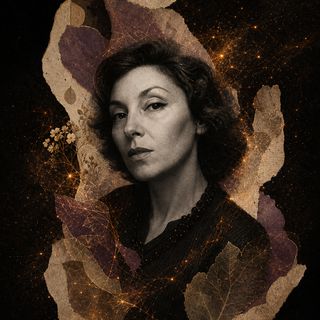
At this time of year, public language becomes absolute. Home is warm. Families gather. Everyone is expected to be grateful. Yet a closed office, a school holiday, financial pressure and more time beside an abusive person can make the season especially dangerous. The celebrations are real. So is the fear.
Christmas does not cause abuse.
Abuse is a pattern of power and control. Alcohol, money worries or a crowded calendar do not create that choice and do not excuse it. What the festive period can do is increase isolation, close ordinary places of respite and give an abusive person more opportunities to control someone.
These are service and police-call figures, not a complete measure of prevalence. Many people never contact the police or a specialist organisation. The careful conclusion is that services experience intense demand around Christmas and New Year, not that every place follows one identical seasonal pattern.
Five archive birthdays to remember.
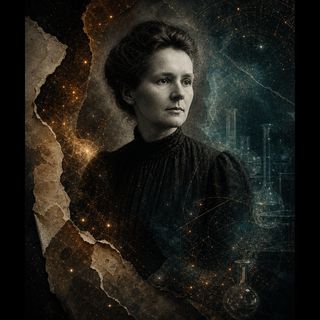
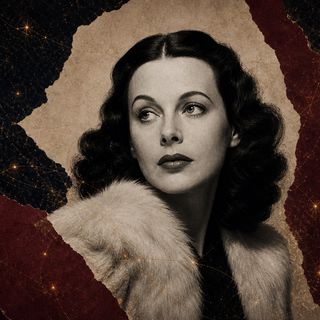
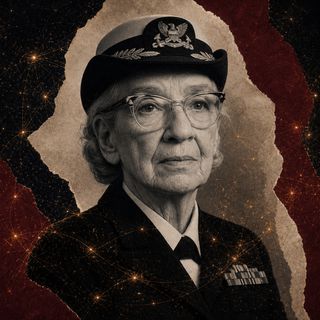
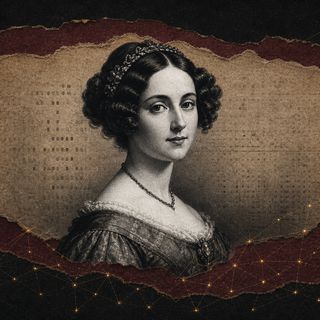
Celebration belongs here too. These women share a place on the November and December calendar, not one historical lineage. Each record stands on its own contribution and sources.
Investigated radioactivity, isolated polonium and radium with Pierre Curie, and organised mobile X-ray work during the First World War.
Co-invented a patented frequency-hopping communication system with George Antheil.
Developed early compiler work and FLOW-MATIC and contributed to COBOL.
Published notes on the Analytical Engine, including a procedure for calculating Bernoulli numbers.
Wrote novels, stories and chronicles whose treatment of interior life changed Brazilian literature.
This is a calendar-based discovery path. It does not claim that one woman influenced another or that any of these women is connected to the domestic-abuse evidence above.
Books for understanding, and one for December.
See What You Made Me Do
Jess Hill shifts the question away from why someone did not leave and towards perpetrators, coercive control and the systems that enable abuse. Its reporting is rooted mainly in Australia, with a later UK edition.
Publisher detailsNo Visible Bruises
Rachel Louise Snyder examines myths about domestic violence and the connections between private harm, policing, law, intervention and public policy. Its main reporting context is the United States.
Publisher detailsIn Control
Jane Monckton Smith explains her eight-stage homicide timeline and how coercive relationships can escalate. It is serious, potentially distressing reading, not a self-assessment tool or substitute for specialist support.
Book detailsThe Hour of the Star
Clarice Lispector’s final novel follows Macabéa, a poor young woman in Rio de Janeiro, while questioning who has the authority to represent another person’s life.
Instituto Moreira Salles guideContent note: the first three books discuss coercive control, assault, homicide and failures of institutions. Readers can choose whether this is the right time to approach them.
Join online, worldwide or in Dublin.
16 Days of Activism
The annual global campaign challenges violence against women and girls. The Irish campaign page explains the dates, the purpose and ways to recognise technology-enabled abuse.
Read the Irish campaign pageHora de Clarice
Instituto Moreira Salles marks Clarice Lispector’s birthday every 10 December. The 2026 programme focuses on the 80th anniversary of The Chandelier, with events in São Paulo and Rio and an open invitation for institutions worldwide to participate.
See the programmeDublin Art Book Fair
Dublin UNESCO City of Literature lists the 2026 fair across eleven December days. Check the organiser’s programme before travelling, as individual session times and booking conditions can change.
Check the listingBarróg Magazine launch
Hen’s Teeth hosts the magazine’s third-issue launch with live music and readings in aid of Women’s Aid.
See event and ticket detailsModernism and Contemporary Europe
MoLI begins a lecture and podcast series on modernism’s place in contemporary European culture. Confirm availability directly with the museum.
See MoLI eventsWomen’s history from home
The National Women’s History Museum keeps virtual talks, recorded programmes, biographies and classroom resources online. This is an ongoing resource rather than a confirmed live December event.
Explore the virtual programmeThe end of the year does not have to carry one mood. We can celebrate women whose work widened the world and still notice the person for whom a closed door does not mean safety.
Matria’s question: What would it mean to make room for someone else’s truth when the season tells us there is only one acceptable story?
Sources and boundaries
- Women’s Aid Ireland, festive-period service statement and helpline information, 16 December 2025.
- Northern Ireland Statistics and Research Agency, police calls for service, 20 December 2025-2 January 2026.
- Nobel Prize, Marie Curie biography and birth date.
- National Women’s History Museum, Hedy Lamarr biography, birth date and patent history.
- Computer History Museum, Grace Hopper birth date and computing work.
- Computer History Museum, Ada Lovelace birth date.
- Instituto Moreira Salles, Clarice Lispector biography and 2026 Hora de Clarice programme.
- Contribution and impact summaries for Curie, Lamarr, Hopper, Lovelace and Lispector are derived from their sourced Matria archive records.
- Book descriptions are paraphrased from publisher records, the linked catalogue and Instituto Moreira Salles. No book passage or cover is reproduced.
- Event details were verified on 12 November 2026. Readers should confirm booking, accessibility, time zones and cancellations with each organiser.
Editorial boundary: the archive birthday constellation and the domestic-abuse section share a year-end issue, but no historical or causal connection is asserted between them. Matria has not independently audited the event organisers. This draft contains no survivor testimony and no generated depiction of abuse.